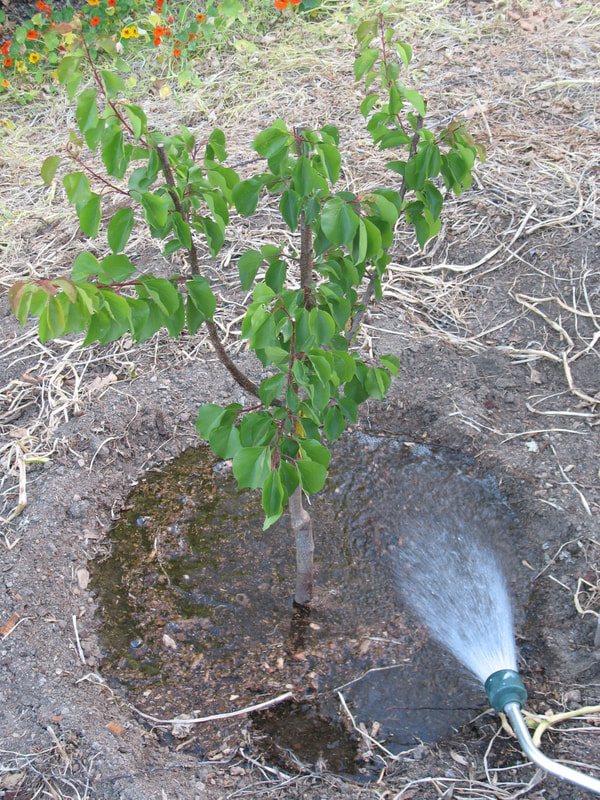
Until now, frequent surface sprinkling (perhaps every day or every other day) has fostered excellent seed germination and kept seedling transplant roots moist.
Now it’s time for less frequent (perhaps twice a week) but deep watering (down to six inches or more) to entice roots to grow down “chasing” the water as defense from the heat at the surface from the coming summer’s blasting sun.
The watering patterns you begin now will help or hinder your plants’ abilities to thrive–not just survive–during the extensive and extended heat of summer that’s coming.
Germinating Seeds
Water the beds or flats several times a day until the plants are up, and then at least once a day until the second set of true leaves develops. “True” leaves look like miniature versions of mature leaves.
Transplanting Seedlings and Small Plants
After transplanting plants into their new homes, form a 5-to-6-inch donut basin around each plant and fill it with water several times to make sure that the water sinks several inches down below the extending plant roots. Do this twice a week for two weeks, by which time the plant roots should be well-established and the plant growing vigorously.
Strong Growth
Less-frequent and deeper watering pattern (perhaps continuing the twice-a-week deep watering) encourage roots to grow deeply into the soil for moisture rather than spread barely below the soil surface. During hot, dry spells, these deeper roots will have access to deep moisture for continued strong growth. This watering pattern will also save you time and irrigation water, since the deeper watering will evaporate less.
The Buried 5-Gallon Bucket Technique
Sink a 5-gallon nursery container with holes in the bottom into a garden bed. Fill with water, and the holes will gradually release the water into the soil about 9 inches deep, so it can spread directly to plant root zones and roots remain consistently moist however hot the summer temperatures are. Adding a small shovelful of manure or compost into the container will enable each watering to add nutrients as manure “tea” or compost “tea” exuding out of the bucket’s bottom holes.
Water Early in the Day
Overhead irrigation is fine to keep foliage clean, but must be finished earlier enough in the day so that foliage dries completely before sunset. Fungal and bacterial diseases thrive in warm, moist conditions and can develop overnight.
Watering the Lawn
Change watering lawn timing to only once a week or ten days. Let the grass tell you when it needs to be watered – it’ll wilt slightly and turn from bright green to dull green. Water deeply enough to thoroughly moisten the soil down to the bottom root tips, 6 to 12 inches deep. Then allow the surface of the soil to dry between waterings so the lawns are healthier. Diseases develop when grass blades and the soil surface are constantly wet, especially when the weather’s warm and overnight.
No Responses